
 1 hour ago
10
1 hour ago
10
ARTICLE AD BOX
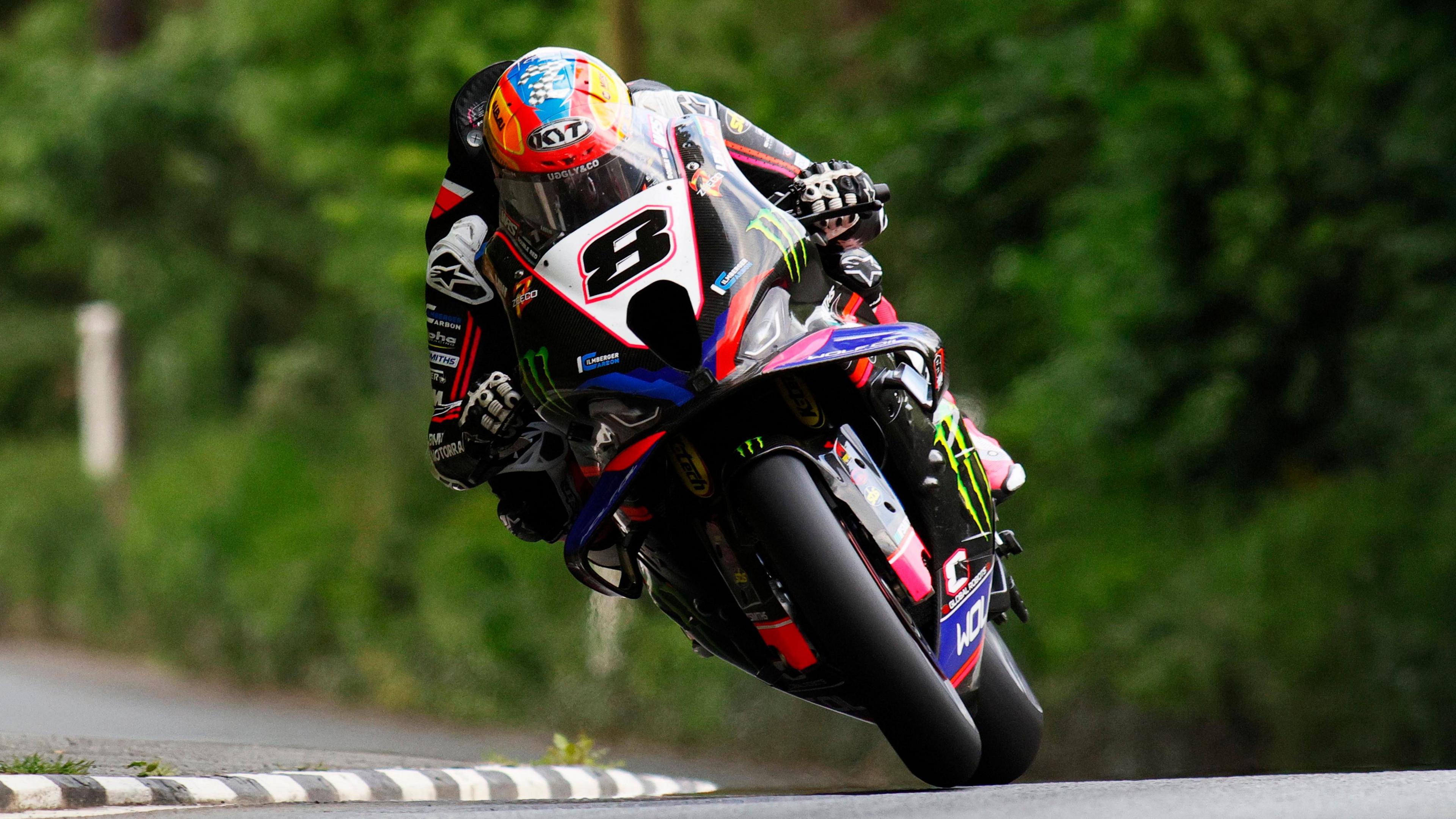 Image source, Pacemaker
Davey Todd is one of the top road racers at the North West 200 and Isle of Man TT
ByAndy Gray
BBC Sport NI Journalist
The North West 200 road race has been overshadowed by the death of Czech Republic rider Kamil Holan.
Holan, 48, died after an accident at the high-speed Station Corner in the Superbike qualifying session, which was the first on-track action on Thursday.
He became the 20th rider fatality in the 97-year history of the North West 200, and the first since Malachi Mitchell-Thomas died after a crash in 2016.
On Thursday evening, with the approval of Holan's family, the event resumed as riders took to the circuit for the final qualifying sessions, and six races will go ahead as scheduled on Saturday.
Davey Todd, a leading road racer who is missing this year's event because of injuries sustained at a crash in Daytona in March, acknowledges how it is hard for people outside the sport to fathom how riders can head back on to the track so soon after a tragedy.
"I do understand it. Unfortunately, to understand it, you have to be a part of it," Todd told BBC Sport NI.
"As soon as you are a part of this amazing sport, you understand how it works and why we continue to do what we do.
"Honestly, that's the only way, as much as you try to explain to people exactly why we're going to continue to race on Saturday after such a tragic thing."
Motorcycle road races take place on closed public roads, and the Triangle Circuit at the North West 200 is comprised of 8.97 miles between the towns of Portstewart, Coleraine and Portrush on the north coast of Northern Ireland.
Station Corner, where Holan lost his life, is one of the fastest sections on the circuit.
Todd, who is a nine-time winner at the North West 200, has experienced competing after a fatal accident on a number of occasions at the Isle of Man TT, where 10 riders have been killed since he made his debut in 2018.
The 30-year-old says tragedies are "something we all think about and spare a minute for remembering the fallen riders".
He added: "At the same time, as soon as that visor goes down, you actually can't think about anything else.
"For me in particular, it gives you a little bit of a break when the visor goes down because all you can think about is the road in front of you and the track in front of you.
"You can't actually think about the ''what ifs' and the doubts and everything else in your mind. It helps you continue, but as soon as the helmet comes back off then the memories come back."
'Everyone's thoughts are with the family of the rider'
Todd explained he is in his "happy place" when on the circuit and says that "for most of us it is all we know".
"When the visor comes down, it is more relaxing and the doubts and the fears, and everything else in your whole life actually, they go away when the visor goes down and it's just you."
English rider Todd, who will be part of BBC Sport NI's coverage of the racing on Saturday, said that while it is "really tough" when a rider passes away, the road racing "community really comes together".
"Everybody stands together and it's not the nice side of racing, but it is a part of it nonetheless," Todd said.
"Everybody supports each other and tries to be there for each other in the times of need.
"At the end of the day, as the family did on this occasion, all of us would want the racing to continue nonetheless.
"We love it, we love the sport. We love almost everything about it and try and continue and remember this rider for as long as possible."
'The highs are high, but the lows are low'
Road racing is a dangerous sport, as riders can reach speeds of more than 200mph on the long run to University Corner at the North West 200, but there are measures in place to make it as safe as it can possibly be.
Protectors and bales are placed in front of trees, lamp posts, walls and kerbs that line the circuit, while certain street signs and other obstacles are removed for the duration of the event.
The circuit used to be a fast and flowing triangle, but as the speeds of bikes have increased four chicanes have been introduced to lower the average speed of the lap.
The latest of these was introduced at Mather's Cross in 2010, which was previously a high-speed curve with little run-off, after the deaths of Robert Dunlop in 2008 and Mark Young the following year.
When Mitchell-Thomas died in 2016, additional protectors were introduced along the coast road, and safety measures are reviewed before the event each year.
If there are any concerns about track conditions, such as oil spills or debris, experienced former racers are among those who head to the scene along with officials to help decide if it is safe for bikes to head back out on track, and if any action needs to be taken.
However, as Holan's accident tragically highlighted, the sport will never be 100% safe, and those who race on Saturday will do so in his memory.
"When it's good, it's the best thing in the world," Todd said.
"There's nothing that compares to the feeling of it. The highs are highs, but the lows are really low."


 English (US) ·