
 1 hour ago
8
1 hour ago
8
ARTICLE AD BOX
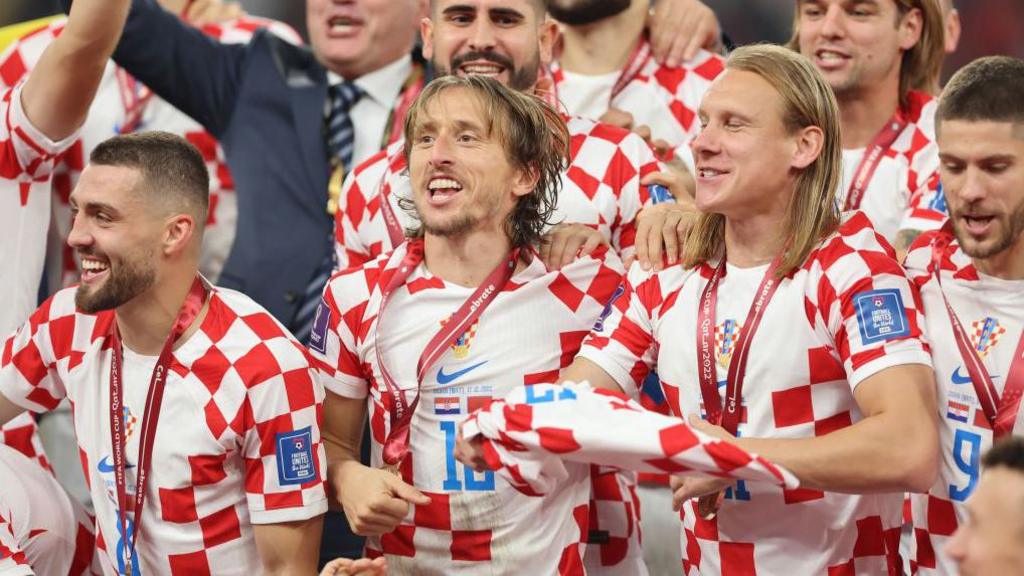 Image source, Getty Images
Luka Modric made his Croatia debut in 2006 and has won 198 caps
ByAlex Bysouth
BBC Sport Senior Journalist
The small, skinny, teenage midfielder was very protective of his flowing locks. But the attention spent on his hair was becoming a problem for the coach.
"I was freaking out," smiles Romeo Jozak. "Of course, I didn't know he was going to become the Luka Modric down the road.
"Any pass he was going to do, it was [flick of the hair]. We even had a couple of fights. Well, I was the coach and I had the last word, so he eventually cut that hair!"
Modric, Croatia's most successful ever footballer, has since regrown those locks and that small, skinny frame has carried him to six Champions League titles with Real Madrid and a Ballon d'Or.
He captained Croatia to a World Cup final in 2018, third place four years ago and, aged 40, will lead his side into their 2026 opener against England on Wednesday (21:00 BST).
Modric and Jozak, who has played a key role in the development of the nation's top talent, can laugh about their early exchanges now.
"He did say 'do you know you and the army [Modric spent a year doing national service] are the only ones that cut my hair'," says Jozak. "There's a respect and I feel it whenever we see each other, even though he's now the superstar."
Modric's rise to such superstar status - from a child displaced by war to a national icon approaching 200 caps for Croatia - is an underdog story synonymous with a country that continuously defies the footballing odds.
 Image source, Getty Images
Modric played 130 games for Dinamo Zagreb before joining Spurs in 2008
Modric's childhood was shaped by war. He is one of the few players in the current squad who lived through a conflict that ran until 1995 after Croatia declared independence from Yugoslavia in 1991.
He was six when his grandfather, Luka, was killed by Serbian forces close to his home near the Velebit mountains, where he would herd goats. The family home was burned and Modric's father went to war.
The youngster was forced to move to Zadar with his family, living as refugees in hotels where he would play football with other children displaced by the fighting.
The Croatia national team, meanwhile, were admitted by Fifa in 1992, then Uefa in 1993, meaning they missed out on qualification for the 1994 World Cup.
But stars such as Zvonimir Boban, Davor Suker and Robert Prosinecki, who all previously represented a strong Yugoslavia side, reached the quarter-finals at Euro 96 and finished third at the World Cup in France two years later, beating Germany and the Netherlands.
The conflict, Jozak says, played a role in the players' drive and character, but there was, and remains, pride in representing a country of less than four million people and a confirmation in their ability from outperforming bigger nations.
"We don't use it as a motivation per se, because that motivation is built within the players," says Jozak.
"[But] some had relatives killed in the war and those things stay inside of you. You take it out of your genes and use it when you need it the most.
"Pride initially came from the country, from the patriotic things that we've had in the past regarding the war.
"Yes, we're a small country, but lately with the results we've had and even we have with the youth, it is not only pride, it's self-confidence."
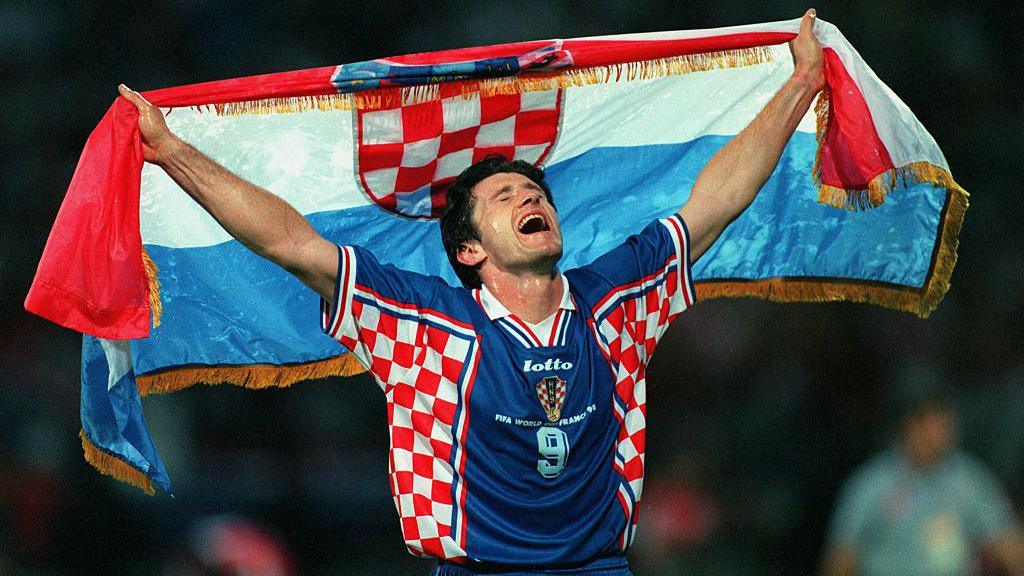 Image source, Getty Images
Davor Suker won the Golden Boot at the 1998 World Cup as Croatia finished third
It would, however, take 20 years for Croatia to emerge from the group stage of a World Cup again, bettering the original golden generation by reaching the final in Russia in 2018. But the seeds had long been planted.
Jozak, whose own professional career was cut short by injuries, held a number of coaching roles with Dinamo Zagreb's youth teams before at various stages becoming the club's academy director, sports director and most notably technical director of the Croatian Football Federation (CFF).
He was still a young coach leading Dinamo's second team when Modric joined as a 16-year-old from Zadar, having been overlooked by Hajduk Split.
"He was always a good guy, well-educated, humble," explains Jozak. "He wasn't a doubt, because we always saw something in him.
"But you couldn't say 'Listen, he's going to be a superstar', because he was short and skinny and how are you going to say this guy is going to be dominating the world, right?
"He was always reliable in the way that you can put him on the team, he's not going to lose the ball where he's not supposed to lose it. He's always going to fight, he's always going to run, he's going to deliver.
"But he wasn't even in the top three prospects at that time."
The young midfielder, obsessed with his hair, was sent on loan to Zrinjski Mostar of the Bosnian Premier League to earn first-team exposure, before spending a season in Croatia with Inter Zapresic.
"Football is very unpredictable, personality-wise," says Jozak. "His personality drove him. Spending one year in Bosnia made him tougher. He literally survived.
"He was a kid, he was skinny and young, but he had this drive, he had this hunger - like a bull terrier, he wanted to rip off every potential tackle and duel he was confronted with."
Developing talent & Gvardiol at number 10
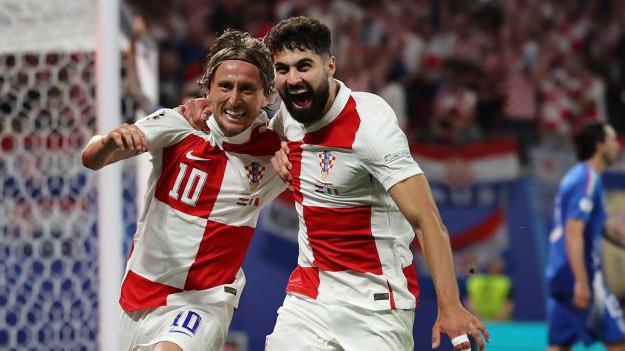 Image source, Getty Images
Jozak says Croatia's defence could be key this tournament, with Manchester City's Josko Gvardiol one of the stars
What Jozak created at Dinamo was huge internal competition between young players, with almost all of them representing Croatia at youth level.
"That was a talented group - a pure privilege for me as a coach," he explains. "Because of the internal quality in a training session, it was survival.
"You cannot afford to lose any ball because the other guy is right there stepping in.
"Internal quality is one of the crucial components in the coaching process that you cannot artificially create. 'There's this little lion next to me. He wants to make it as well.'
"You have to feel the pressure to push you and be better every single day."
Later, when he became academy director in 2008, Jozak helped turn Dinamo into one of the most prolific talent factories in Europe.
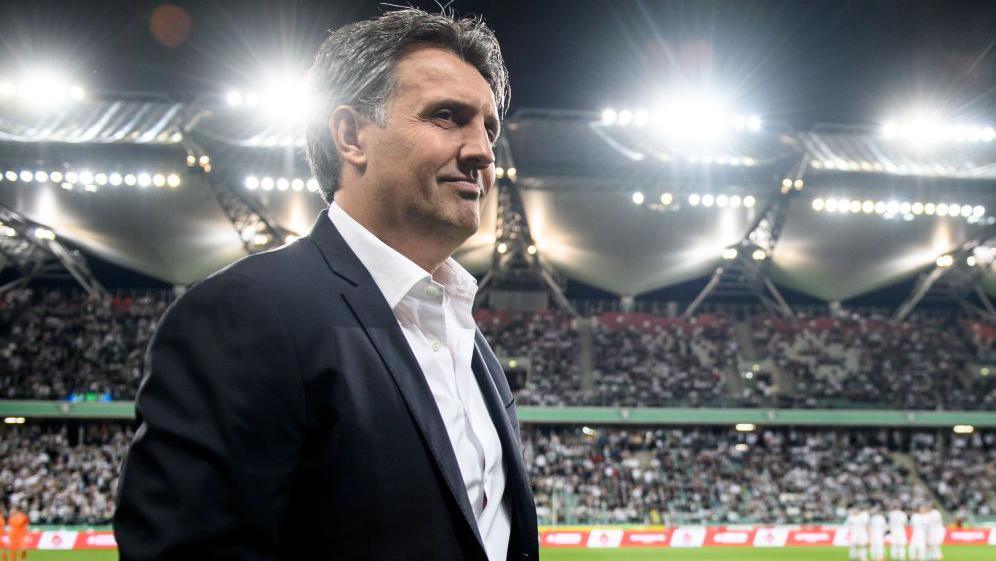 Image source, Getty Images
Romeo Jozak was recently appointed sporting director at Sharjah FC in the UAE Pro League
That same year, Modric left for Tottenham Hotspur, following former team-mates Vedran Corluka and Eduardo to the Premier League.
But more talents emerged. Mateo Kovacic earned a move to Inter Milan, Tin Jedvaj and Sime Vrsaljko also went to Serie A, Alen Halilovic was signed by Barcelona.
Such was Dinamo's reputation, in 2014 a 16-year-old Dani Olmo went the other way - leaving Barcelona's famed La Masia academy to join the club.
One of the most important aspects was getting the right coaches in place, as Jozak says "behind every drill, there has to be a person".
"Wrong people cannot stay on the bus," adds Jozak, who also nurtured a great appreciation of the ball.
"When you go to the bathroom, you go with the ball. When you pick up your phone, you go with the ball. Everything's done with the ball."
Manchester City defender Josko Gvardiol was one of the beneficiaries, joining the academy during Jozak's tenure and being deployed in midfield or as a number 10 throughout his development.
"That's why he's got this left foot," smiles Jozak. "He was playing midfield. He was talented, growing in the density of the internal quality. He has a super technique. Then later he grew to be tall and fast."
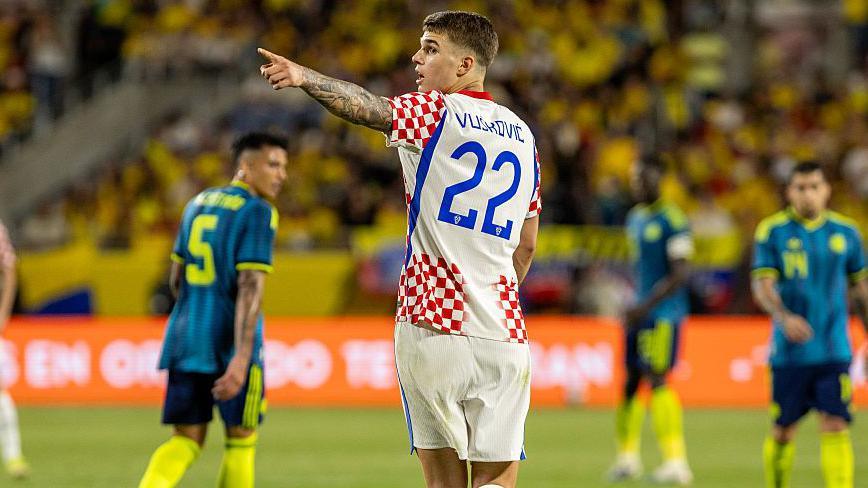 Image source, Getty Images
Luka Vuskovic spent last season on loan at Hamburg
That benefited Dinamo, of course, but Croatia too. Almost half this World Cup squad is made up of players who have passed through the Zagreb club.
But as Croatia's technical director between 2013 and 2017, one of Jozak's tasks was to build a "bridge" between all clubs and the national team.
"The academy directors are the key to the success of any country. So they felt appreciated and respected," says Jozak.
The youngest player in the squad, for example, is Luka Vuskovic, the 19-year-old Tottenham centre-back who progressed through Hadjuk Split's academy - he was not even born when Modric made his Croatia debut.
"He will be one of the top superstars for the future, for sure," adds Jozak, who wrote the country's coaching manual and identified the principles for developing young talent.
The environment is key, too. The Croatian league is competitive but also a good platform for clubs to blood young stars before they move on - 18 of the World Cup squad now play for top-flight clubs in England, Spain, Italy and Germany.
Jozak was unable to convince Christian Pulisic to represent Croatia - despite the CFF helping him obtain a passport that allowed the midfielder to join Borussia Dortmund aged 16.
But their footballing reputation is now so established the Balkan nation are benefiting from a diaspora wanting to pull on the red and white checked shirt.
"The locker room of Croatia is as it's supposed to be," adds Jozak. "They're very passionate, very patriotic, very disciplined in the way they like to fight for something. It's always with pride and always a privilege."
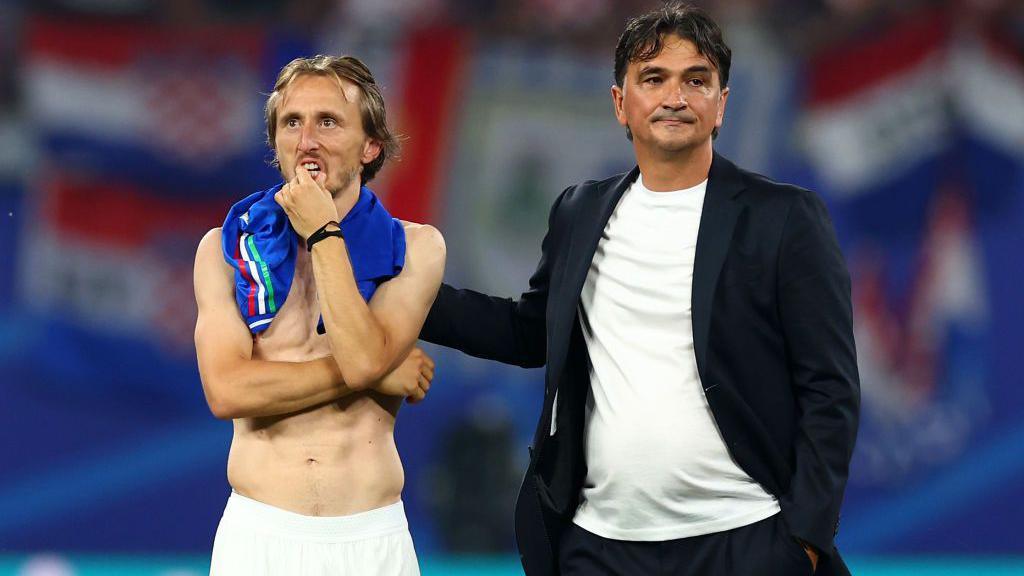 Image source, Getty Images
Zlatko Dalic took charge of Croatia in 2017
For all the talent coming through, though, Croatia only won one game at a World Cup after 1998 before head coach Zlatko Dalic was appointed in 2017 - he has steered them to second and third in his two tournaments in charge.
"He understands the social, emotional relationships and the people. He's compassionate. He's a knowledgeable coach and super talented," says Jozak.
"He understands the mentality - the emotional connections and when to put your foot on the gas, when to take it off, when it's time to yell and when it's time to hug somebody.
"In Croatia, we are very emotional and very social people. We want to get together. You're never going to see players in the locker room not speaking to one another.
"If they push in the same direction it's a huge power and he's the one maintaining those relationships and emotions. I would call him a very intelligent emotional and mental coach other than the pure football knowledge he has."
 English (US) ·