
 3 hours ago
10
3 hours ago
10
ARTICLE AD BOX
43 minutes ago
Ben ChuPolicy & analysis correspondent, BBC Verify

 BBC
BBC
After losing the confidence of his MPs and key members of his cabinet, Sir Keir Starmer appeared outside Downing Street on Monday to announce his resignation as prime minister.
BBC Verify looks at the record of his time in government in key areas from immigration to energy bills since he took office in July 2024.
In August 2024, just a month after taking office, a YouGov poll suggested that only 36% of people thought Sir Keir was doing well as prime minister and 43% said he was doing badly, giving him a net popularity rating of minus 7.
This month 74% said he was doing badly, versus 18% who thought he was doing well, suggesting his net popularity had slipped to minus 56.
Other polling from Ipsos suggests that Sir Keir's personal ratings among voters fell below his predecessors as prime minister in modern times, including Rishi Sunak, Boris Johnson and Theresa May.
Economic growth picked up
Labour's manifesto pledged "to secure the highest sustained growth in the G7", made up of the US, the UK, Japan, France, Italy, Germany and Canada.
There had been some progress.
Between the second quarter of 2024 - just before Labour came to power - and the first quarter of 2026 data from the OECD suggests that the UK economy grew by 2.3% in total, faster than the rest of the G7, apart from the US which grew by 3.7% over that same period.
And the UK economy did register the fastest growth among the G7 nations in the first quarter of 2026, when it expanded by 0.6%.
But most forecasters do not expect this performance to last, partly because of the energy shock from the US conflict with Iran.
The International Monetary Fund's (IMF) latest forecast suggests UK GDP growth over 2026 as a whole will fall to 0.8% in 2026, which would be lower than the forecast for the US (2.3%), Canada (1.5%) and France (0.9%).
The IMF also projects weaker growth for the UK than the US and Canada in 2027.
On small boats, Sir Keir pledged to "smash the gangs" behind them but these Channel crossings have continued under his premiership.
However, there are signs of a slowdown in the rate of arrivals.
Under Labour overall immigration to the UK and net migration (the difference between immigration and emigration) have both fallen significantly.
In the most recent official estimates for 2025 net migration was 171,000, down 48% over the previous year and down from a peak annual rate of 944,000 in 2023, under the Conservatives.
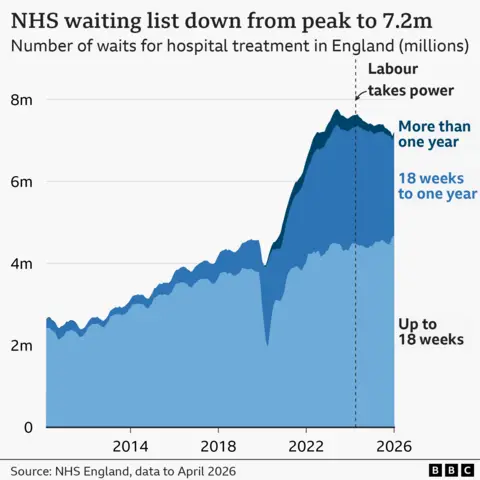
On health Sir Keir pledged that 92% of patients in England would be seen within 18 weeks by the end of the Parliament.
The overall number of waits for treatment in England in April was 7.22 million, down from 7.62 million in June 2024, a decrease of 400,000.
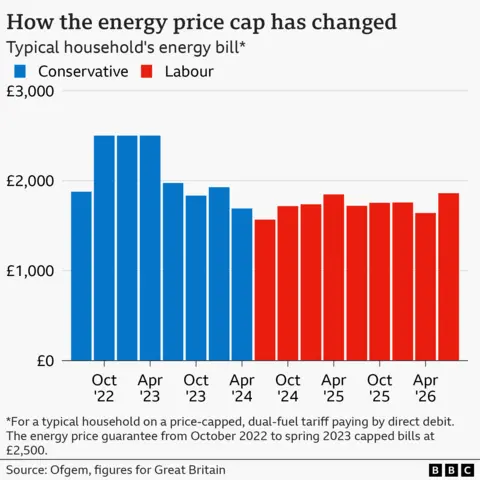
The latest domestic energy price cap set by Ofgem, the energy regulator, for the summer of 2026 is an annual rate of £1,862 for a typical household - in part reflecting the impact of global events like the Iran war.
Benefit spending increased
A major driver of this increase is projected to be health and disability welfare payments to working-age adults, in particular more grants of Personal Independence Payments (PIP).
The total working-age adult health and disability benefit bill is forecast to rise from £58.2bn in 2024-25 to £78.1bn in 2029-30.
The official impact assessment suggests that this will result in 450,000 fewer children in relative poverty - after housing costs - by the end of the Parliament than there otherwise would have been.
Additional reporting by Tom Edgington, Becky Dale, Aidan McNamee, Jess Carr, Wesley Stephenson, Christine Jeavans and Daniel Wainwright






 English (US) ·