
 3 hours ago
10
3 hours ago
10
ARTICLE AD BOX
29 minutes ago
Phil SimScotland political correspondent

 BBC
BBC
Ballot boxes arriving by ferry from the island of Bressay for the Shetland count
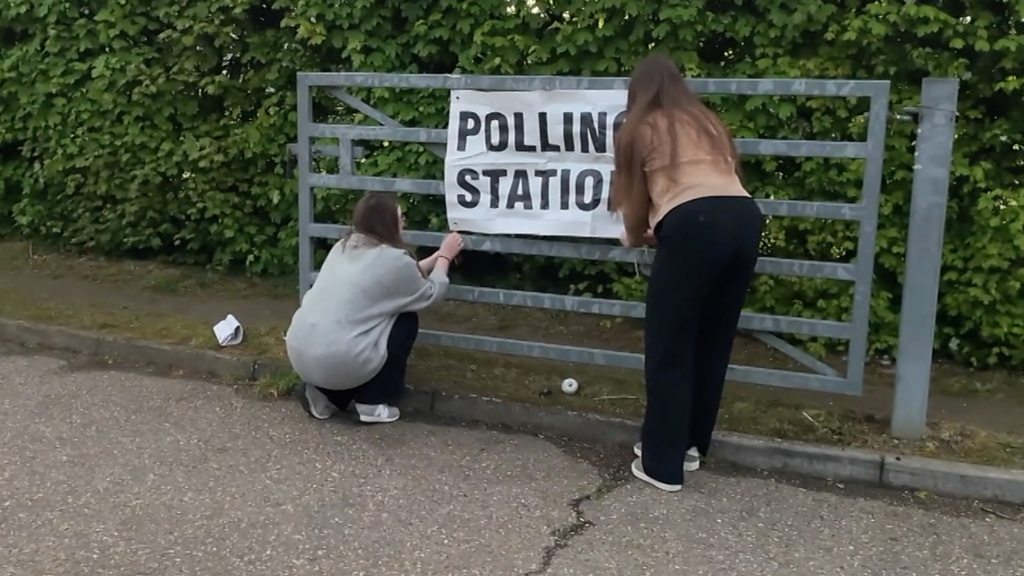
The campaigning is over, and votes have been cast.
All that is left is to tally up the ballots and find out who has won the Scottish Parliament election.
With local strongholds in the balance, familiar faces fighting to hold onto their seats and the future direction of Scottish politics at stake, every party has a part to play in this story.
What should we look out for through the day as the results start to come in?

Will there be an SNP majority?
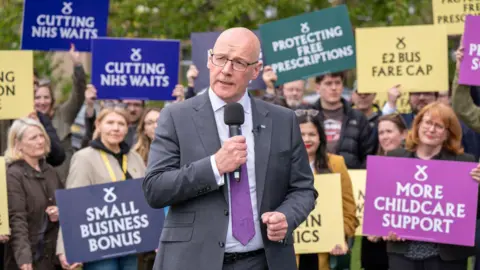
John Swinney has set a lofty goal for his SNP - winning an outright majority of 65 seats to try to force the issue of Scottish independence.
Holyrood's electoral system makes this difficult. It includes 73 constituencies, elected first-past-the-post like seats at Westminster, as well as 56 more which use a form of proportional representation to balance things out.
But there is, in theory, a narrow path for the SNP to win the required seats solely from the constituencies.
 PA Media
John Swinney has set a goal of an SNP majority
This would involve gaining ground from Labour and the Conservatives at the same time as avoiding losing any seats out of the back door to either Labour or the Lib Dems.
A crucial question is whether the vote is splintered between those challenger parties, or whether there is more tactical voting on a seat-by-seat basis among voters with a shared aim of halting the SNP's charge.
If the SNP does win a majority, we enter a whole other discussion about mandates and the UK government's ongoing opposition to a fresh independence poll.
But that's a big "if" which needs to be addressed before we go any further.
Who will be first minister?
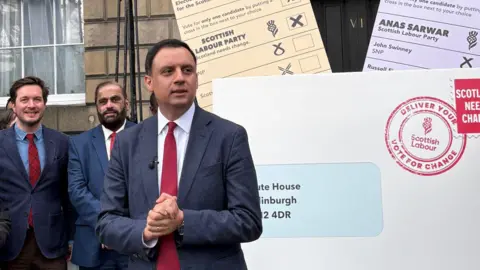
Other than John Swinney, there is really only one leader who has consistently put their name forward to be first minister - Labour's Anas Sarwar.
The prospect of an outright win for his party seems vanishingly distant, with Labour's struggles in government at Westminster having dragged them down in the Scottish polls.
So the outcome of a Sarwar government relies on complex calculations of how Holyrood lines up post-election.
If the SNP is short of a majority, the first question is how many Green MSPs there are.
Co-leaders Ross Greer and Gillian Mackay have been fairly clear that they'd be happy to put John Swinney back in power if they can cement a pro-independence majority.
 PA Media
Anas Sarwar has consistently put his name forward as first minister
If they can't, the question becomes whether the unionist parties - the Lib Dems, the Tories, and Reform UK - could unite behind Sarwar to make him first minister instead.
The prospect of this has sparked furious rows already, with claims that Sarwar was seeking a "grubby deal" with Reform's Scottish leader Malcolm Offord.
The Scottish Labour leader has since insisted he would not accept Reform votes as the price of getting into Bute House.
But would he have to reconsider that if there was a real prospect of Labour winning power?
How many people will vote?
 PA Media
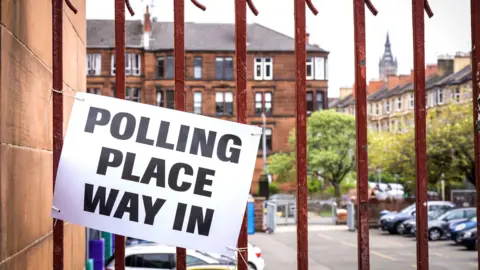
Turnout is predicted to fall at the polls from record levels in 2021
Crucial in answering all these questions is the turnout in an era where every party agrees that the public is "scunnered" with politics.
There have been indications it will fall from the record mark it hit in 2021, of 63%.
Prof Ailsa Henderson of the University of Edinburgh said polling had suggested a figure in the low to mid 50s - which would be more in line with Holyrood turnout through the 2000s.
A record 4.2 million people have registered to vote in the election - but within that figure there has been a drop of 150,000 in the number of people registered to vote by post.
Postal voters are far more likely to actually cast a ballot, so this could be another indicator of falling participation.
So which party is most successful in getting its supporters to turn out is going to be massive.
Will any big names lose their seats?
There are a number of significant figures at risk in this election.
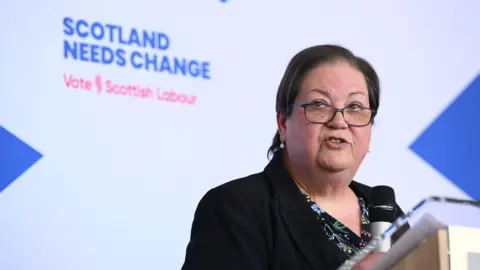
Labour's deputy leader Jackie Baillie has held the seat of Dumbarton since 1999, holding off a series of challenges from the SNP.
But with all of the uncertainties of low turnout and a potentially fractured vote, could this be the year the seat finally changes hands?
In practice, Baillie would likely return to Holyrood regardless, as she tops Labour's West Scotland list.
 PA Media
Jackie Baillie has held the Dumbarton seat since 1999
The same might not be said of Angus Robertson, the SNP's campaign manager and the government's external affairs and culture secretary.
Boundary changes have made his Edinburgh Central seat a possible target for Labour, but the Scottish Greens are also campaigning hard in the area, with former leader Lorna Slater hoping for the party's first ever constituency win.
Should Robertson lose out, he is unlikely to make it back in via the regional ballot, having placed fourth on the SNP list.
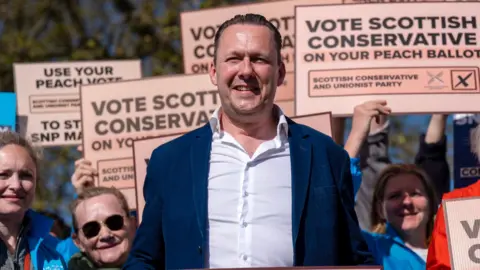 PA Media
Russell Findlay could face a serious challenge too if other results do not go his way
Also in a potentially precarious position is Scottish Conservative leader Russell Findlay.
He is top of his party's West Scotland list, but other results could leave him on a knife-edge.
Should his Conservative colleague Jackson Carlaw retain his seat in Eastwood, it would make it harder for the party to win seats via the top-up list system.
So the former Tory leader winning a seat could ultimately cost the current Tory leader his place at Holyrood.
Will Reform have a breakthrough?
Reform did actually stand in the 2021 Holyrood poll, on the regional ballot.
Under the leadership of Michelle Ballantyne in Scotland and Richard Tice UK-wide, the party managed just 0.2% of the list vote.
But after Nigel Farage returned to the front lines the party has exploded in national polls and is hoping to make a real impact at Holyrood.
For the most part, this is likely to manifest through the regional lists, although the party is fighting hard in seats like Banffshire and Buchan coast.
In many ways, Reform's fortunes will go hand-in-hand with those of the Scottish Tories, and the extent to which the party, which has come second in the last two elections, sees its vote drifting away to a right-wing rival.
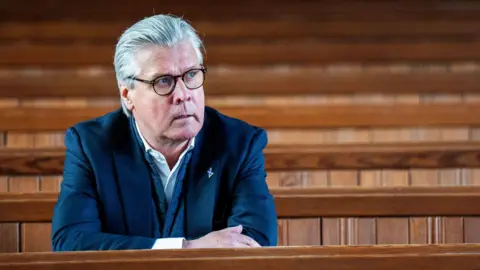 PA Media
Malcolm Offord and Reform UK are banking on the "scunner factor"
But polling and the results of council by-elections suggest that Reform has potential in areas which have not been traditionally Conservative, in communities where the "scunner factor" is strongest.
The party has already made a big impression on the campaign, with multiple opponents scrapping over who can most effectively become the "anti-Reform" vote.
Several leaders were hoping to use Farage as a sort of bogeyman to encourage their own supporters out to vote, and to rally the tactical votes of those staunchly opposed to his party.
If Malcolm Offord heads to Holyrood with a large group of MSPs behind him, it could have a similarly seismic impact on the politics of the coming term.
Who could be the kingmakers?
Last term was a breakthrough for the Scottish Greens, when they entered government with the Bute House Agreement with Nicola Sturgeon's SNP.
But the party has its sights set even higher in this poll, hoping to win a record clutch of MSPs to wield influence in the parliament.
Their promise is to hold the SNP's feet to the fire, to force them to be bolder on climate issues and a host of other topics.
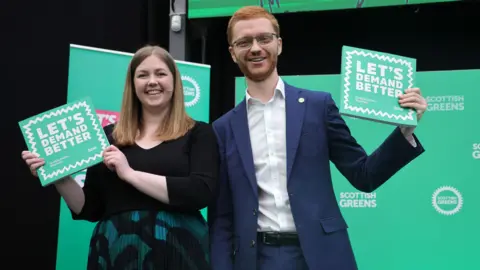 PA Media
The Scottish Greens are hoping to take a new cohort of MSPs to Holyrood
The Lib Dems, meanwhile, are hoping for a resurgence, having been a junior partner in coalitions in 1999 and 2003.
Their support collapsed following a rather more controversial coalition - with the Tories at Westminster from 2010 to 2015 - and it has taken until now for them to begin to shed that baggage.
Both of these parties have set themselves up in a similar way, with their manifestos reading like a menu of options for budget talks with a larger governing party.
But their routes to success are complete opposites.
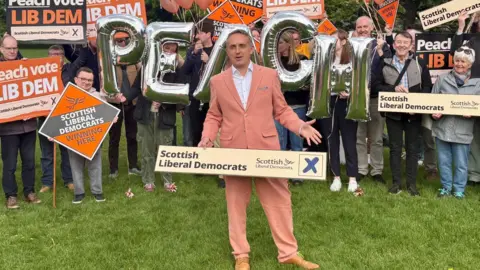 PA Media
The Scottish Liberal Democrats are seeking gains in constituency seats
The Lib Dems are hoping for gains in constituency seats across the Highlands and on the outskirts of Glasgow and Edinburgh, with perhaps a handful of list seats in other regions.
The Greens, meanwhile, are hoping for gains across the regional lists, with perhaps a constituency or two thrown in.
So if you imagine yourself in the shoes of a party campaign manager, you have to juggle the prospect of going up against multiple different parties in separate parts of the country, each of which have their own quirks and local issues, all while crafting national messages that can take on different parties in the larger regional contests.
It underlines the complexity of fighting a Holyrood election - and in trying to figure out the results.
 English (US) ·