
 2 years ago
39
2 years ago
39
ARTICLE AD BOX

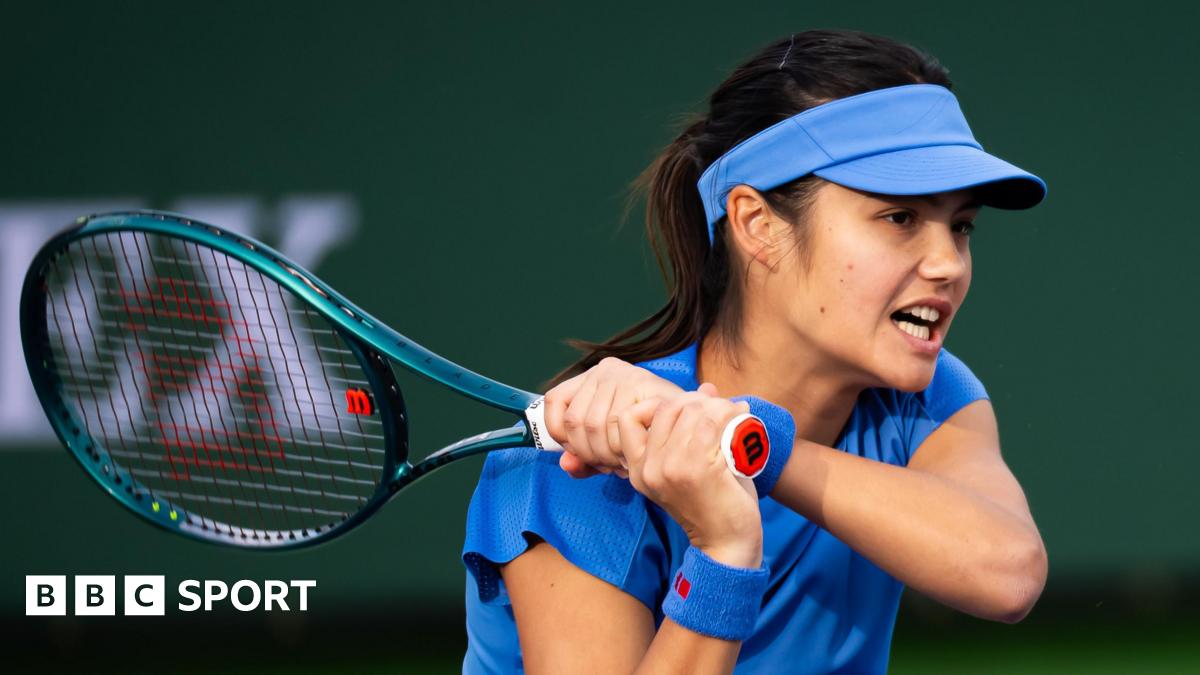
Raducanu was ranked as high as 10th in the world after her famous US Open win in 2021
By Jonathan Jurejko
BBC Sport at Melbourne Park
Venue: Melbourne Park Dates: 14-28 January |
Coverage: Commentary from 06:00 GMT on Tennis Breakfast on Radio 5 Sports Extra and BBC Sounds on Tuesday, with selected live text commentaries and match reports on the BBC Sport website and app |
If there was one downfall to Emma Raducanu winning the 2021 US Open, it was the previously unknown teenager being unable to develop her tennis career at a normal pace.
With intense scrutiny and unrealistic expectation, it was never going to be plain sailing as Raducanu transitioned to one of the biggest stars on a WTA circuit that she had barely played.
A series of injury problems stalled her progress and culminated in an eight-month absence from the court following wrist and ankle surgeries in May.
Now the 21-year-old is set to make her Grand Slam return at the Australian Open on Tuesday - one of five Britons in action on day three in Melbourne, with Cameron Norrie, Jack Draper, Dan Evans and Katie Boulter also playing.
Raducanu takes on American Shelby Rogers in the first round - a player whom the Briton beat in the last 16 on her way to that stunning title in New York.
She described 2024 as a "fresh start" in her career and the signs over the past few days have been encouraging.
In practice sessions and interviews, Raducanu has looked happy, relaxed and - most importantly - fit.
But, whatever happens in Melbourne, BBC Sport explains why expectations should remain tempered and patience might be required.
Potential setbacks
A lengthy period without match practice means it is almost inevitable there will be repercussions in the early stages of a player's comeback.
"When you've had such a long period of time out, you have got massive risk of picking up niggles in other areas," Anna Poyser, lead physio at the Lawn Tennis Association, told BBC Sport.
"It is a big return to playing because you're having to build up fitness, agility and robustness of every joint.
"You're talking about making your hips, ankles and shoulders robust - all the main areas which are predisposed to wear and tear from tennis."
This general observation from Poyser, who did not work with Raducanu in her rehab, was illustrated by the former British number one feeling the effects of her comeback tournament.
Raducanu played on consecutive days at the Auckland Classic, beating Romania's Elena-Gabriela Ruse before losing to Wimbledon semi-finalist Elina Svitolina.
It left her with soreness when she arrived in Melbourne last week and, as a result, she pulled out of two exhibition matches in what her team said were precautionary measures.
Instead Raducanu continued her preparations at Melbourne Park, taking part in two-hour training sessions on Thursday and Friday.
With no obvious sign of discomfort or strapping, Raducanu looked confident while she hit with fellow British players Lily Miyazaki and Jodie Burrage.
"The first matches back after a long break are always going to have a toll on your body," Raducanu said.
"They are a challenge because you're just not used to it, no matter how much you practise or do in the gym.
"It is completely different playing a live situation against a top player."
Goals for the season
Given her superstar status, it is easy to forget how little experience Raducanu has as a senior player.
Raducanu's victory at Flushing Meadows came in only her fourth professional tournament and she started her first full season on the WTA Tour in 2022.
She has still only played 66 tour-level main-draw matches and has been unable to string together consistent performances because of a series of physical problems and illness.
"Emma is so young and it is not like she has played a heavy schedule at any stage in her career, whether professional career or junior career," Anne Keothavong, Britain's women's team captain, told BBC Sport.
"She's not a player with a high match count and she hasn't really had a normal year.
"The main thing is to remain injury free and to continue putting that work in to become a more robust athlete. That's the biggest goal for her in 2024.
"There will be more niggles this year, no doubt about it, it happens to everyone. But it's managing those niggles and understanding what is a serious injury and what's not, that's a challenge for every athlete."
Early impressions
Having not played competitively for almost nine months, it was fascinating to see how Raducanu would fare in Auckland.
The signs were encouraging.
Against Ruse, she showed physical and mental endurance to win 6-3 4-6 7-5 in a contest lasting almost two and a half hours.
Raducanu appeared to have no problems with her wrists, hitting heavily from the back of the court on both forehand and backhand sides. She also served strongly, particularly in the first set.
Recovering to clinch victory - against a close friend who fought back to 5-5 from 5-1 down in the deciding set - was also indicative of her mindset.
While Poyser says British players are offered psychological help during injury lay-offs, Raducanu believes an inner "feeling of gratefulness" is helping her overcome any mental challenges.
"I have realised the only person that can help you is yourself, regardless of who you talk to," she said.
"It has been about myself toughening up, getting stronger."
In Auckland, the next test came against Svitolina.
The pair shared sets in a high-quality encounter before Raducanu faded in a one-sided decider won by the Ukrainian former world number three, who made a strong assessment of the Briton's performance afterwards.
"It was a really physical match," said Svitolina, whose impressive comeback from maternity leave last year included a Wimbledon quarter-final where she beat top seed Iga Swiatek.
"We were striking the ball well. Every point finished with a winner pretty much. I think it was the second-best match that I've played level-wise."
A tighter team
Another talking point around Raducanu has been her chopping and changing of coaches.
Since parting with Andrew Richardson after the US Open triumph, Raducanu has hired Torben Beltz, Dmitry Tursunov and Sebastian Sachs before firing them.
Some observers believe a lack of stability has affected her development. Keothavong thinks the "obsession" with her coaching situation is irrelevant.
A tight and trusted team is her current preference, like she had with Richardson and physio Will Herbert in New York. Her former childhood coach Nick Cavaday is alongside her in Melbourne.
She does not have a full-time physio or fitness trainer. Former British world number four Greg Rusedski told BBC Sport he thinks it would be beneficial to have a "good and solid team around her".
"One thing I forgot about the tour is how everyone walks around with five different people around them," Raducanu said.
"At one time I had a similar scenario but it's a completely different thing to what we would have had growing up.
"I like keeping it close, a small circle and not having to manage five other people. I did that at one point but I'm an introverted person so I like spending time alone or with people I'm close to.
"Having a larger team has become the norm but I've never really done things the normal way."
 English (US) ·