
 1 hour ago
9
1 hour ago
9
ARTICLE AD BOX
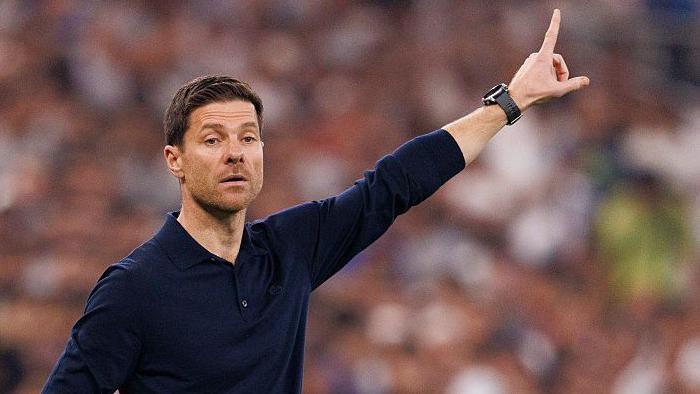 Image source, Getty Images
Chelsea will be Xabi Alonso's third senior managerial role after Bayer Leverkusen and Real Madrid
By
Football tactics correspondent
Things have been rocky since BlueCo took over Chelsea in 2022, but former Bayer Leverkusen and Real Madrid manager Xabi Alonso has been entrusted to get the London club competing at the highest level again.
Liam Rosenior failed to live up to the potential Chelsea thought he had, with many believing his relative inexperience played a part.
Alonso, 44, is only three years older but boasts an impressive body of work - taking over a Leverkusen side second from bottom before turning them into unbeaten Bundesliga champions the following season.
His spell at Real Madrid ended after fallouts with several star players but the Spaniard will have learned valuable lessons from the challenges of such a high-profile environment.
At the time of his dismissal his win percentage of 71.4% was the highest of any Madrid manager in the past decade.
With this in mind, BBC Sport takes a closer look at the rationale behind hiring Alonso and the managerial approach he will likely bring to Stamford Bridge.
Adapting to the players in the squad
Increasingly, for many coaches, systems are less rooted in one specific formation. Rather, modern coaches have a set of principles and beliefs they aim to drill into their squad.
Alonso is one of these coaches. While at Real Sociedad's B team, he would often start in a 4-2-3-1 or 4-3-3 shape. In his last season with Sociedad B, he had moved to 3-4-3, a formation he would become known for, using it to much success at Leverkusen.
For Alonso, these decisions are informed by players - both his own and those of the opponents.
At times, he has opted for a back five in order to match an opposition back-five system, as seen in Madrid's 1-0 win against Juventus in the Club World Cup.
At Leverkusen, with impressive wing-backs such as Jeremie Frimpong and Alejandro Grimaldo, Alonso had wide defenders comfortable attacking high and wide. This made the decision to play with a back five on paper an easy one.
At Madrid, the likes of Federico Valverde, Jude Bellingham, Franco Mastantuono and Vinicius Junior provided the Spaniard with a variety of players capable of thriving out wide, and therefore Madrid often played with four at the back.
Out of possession, Leverkusen set up in an aggressive 5-2-3 shape that looked to step up and apply pressure, holding a high line.
Real Madrid's midfielders and attackers struggled to apply these same ideas, lacking the intensity needed. There was also the added challenge of accommodating both Mbappe and Vinicius off the ball, something Alonso tried to do in a 4-4-2 shape.
Moving between back four and back five mid-game
Whether Alonso starts with a back four or back five, this shape is fluid. He has shapes he looks for during certain parts of the game and asks players with the appropriate skillset to move into specific positions within that shape.
For example, higher up the pitch, Alonso often looks to place five players on the last line of attack, who then take it in turn to drop deep and show for the ball. These five players can be arranged in a number of ways.
This can be with two wing-backs and three narrow attackers from a back-five formation, if the wing-backs are strong in attack.
Starting in a four-at-the-back system, it can be done with one full-back and one winger on either flank - with any combination of three midfielders or attackers playing centrally.
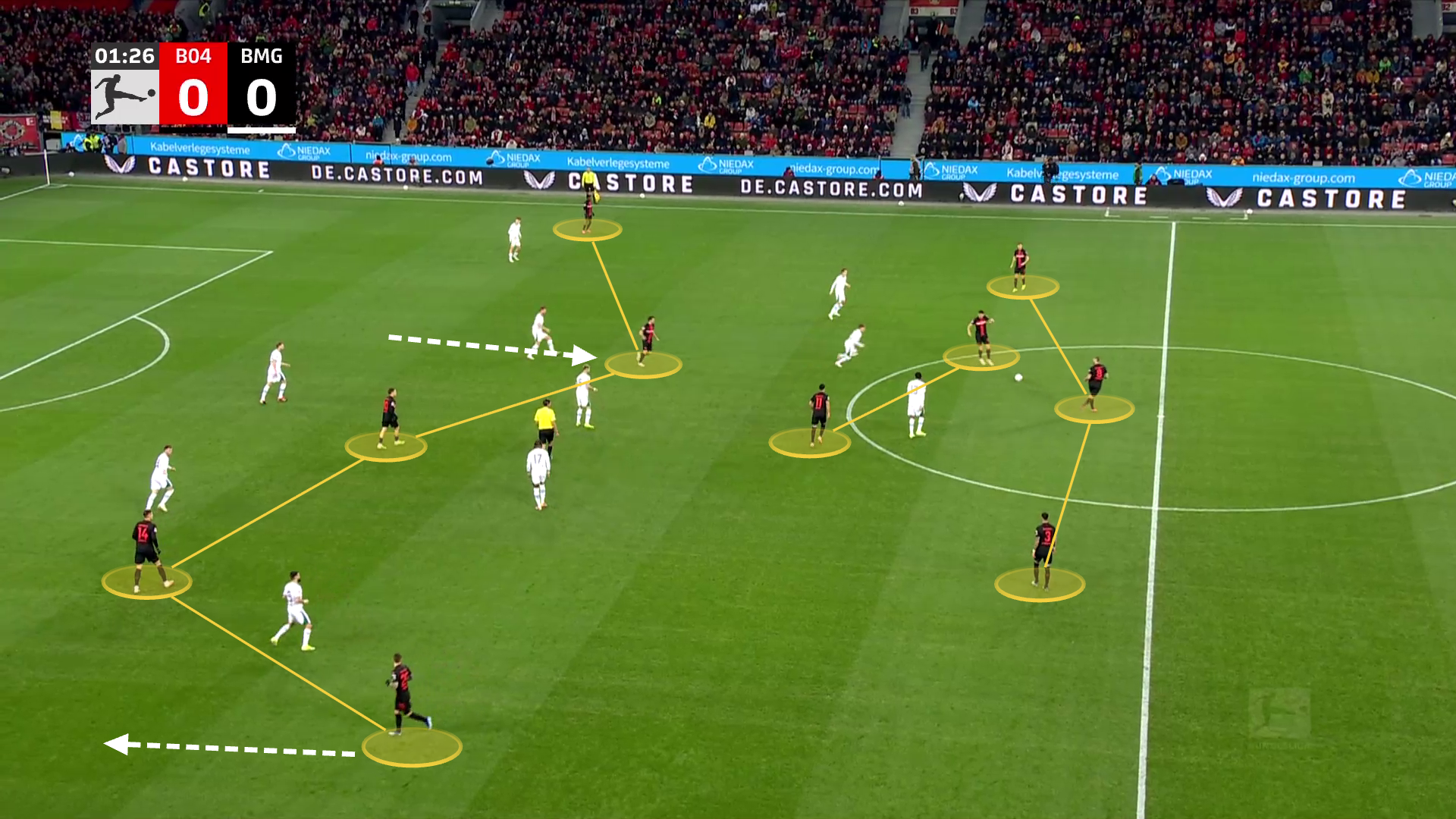
Here we see an example of Alonso's Leverkusen in possession: a back three, a narrow midfield - a key facet of his sides, and a front five encouraged to take turns and drop deep to support players on the ball. The two wide players here are both wing-backs and the three central players are made up of Leverkusen's striker and two attacking midfielders.
With Chelsea opting for a back five against City in the FA Cup final and at times under Rosenior, they do possess players capable of playing either shape.
Marc Cucurella and Malo Gusto have moved from full-back or wing-back positions into central attacking positions higher up the pitch under both Enzo Maresca and Rosenior, something Alonso might utilise.
The likes of Pedro Neto and Alejandro Garnacho, although natural wingers, have also played as wing-backs.
Geovany Quenda of Sporting, set to join Chelsea this summer, is an exciting young wide player too - capable of playing as a winger and wing-back.
Alonso might opt to use him in a similar fashion to Frimpong at Leverkusen, closer to the touchline and alternating between full-back, wing-back and winger.
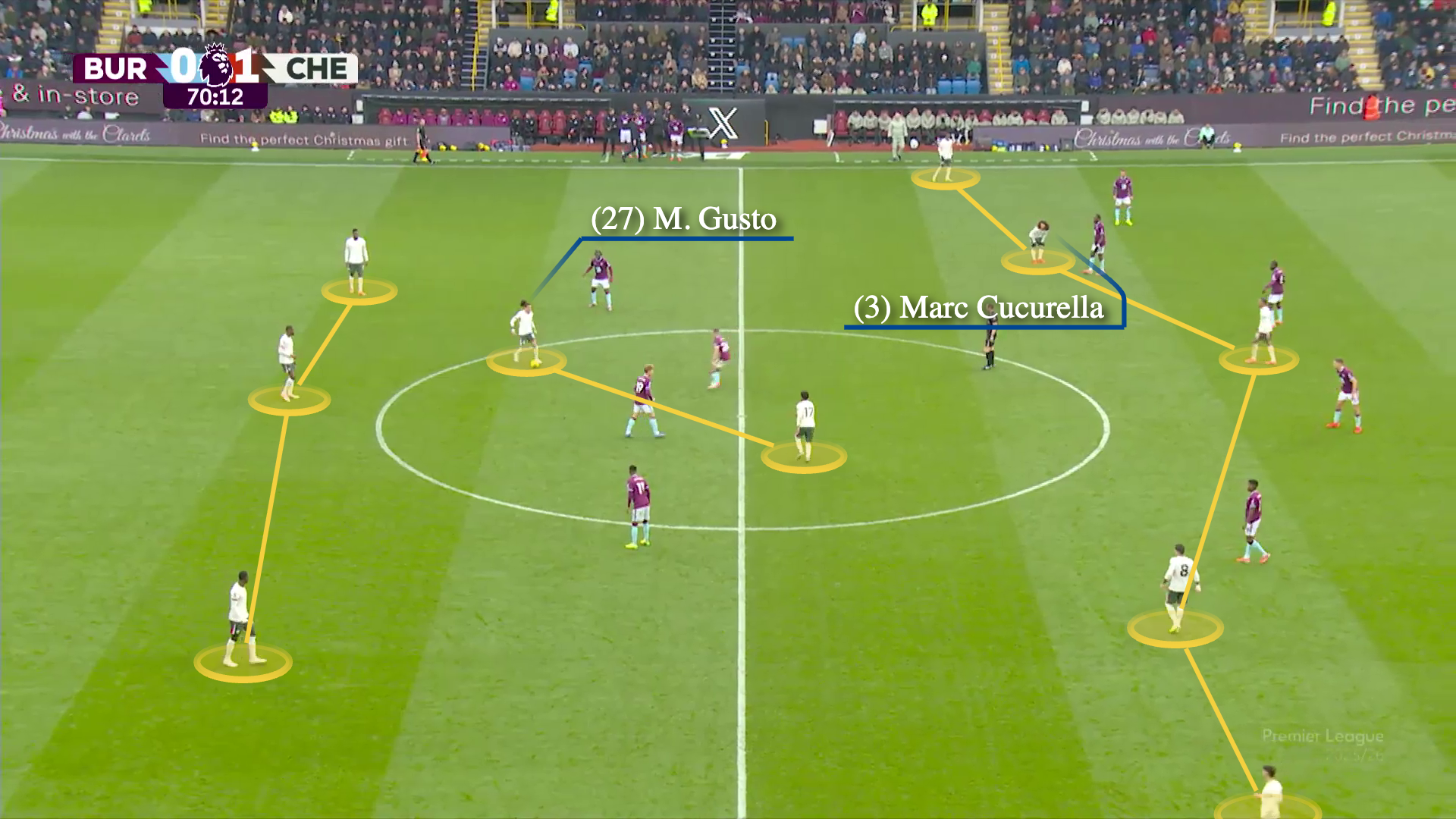
Compared with Alonso's side on the ball, this example under Maresca appears to have the same shape in possession. The wide players are Jamie Gittens and Pedro Neto, rather than wing-backs. Full-backs Malo Gusto and Marc Cucurella instead take up central positions. Alonso will set Chelsea up based on the players' skillset, so seeing wingers out wide with full-backs centrally - given Cucurella, James and Gusto's quality in midfield - would not be a surprise.
Alonso's overarching principles
Alonso wants his sides to dominate the ball, setting up attacks in opponents' halves for long periods.
In possession, he wants his teams to focus on playing many short passes in opponents' halves.
By positioning themselves close to their team-mates, Alonso's sides cluster around the ball allowing them to press in numbers if they lose possession. This allows them to win it back quickly and continue to apply attacking pressure.
Through these small-space interactions between his players, the centre of the pitch can become crowded - but this is a deliberate quirk of Alonso's system.
From a squad-building perspective, Alonso will be looking for technical players who thrive in small spaces, allowing his team to unlock defences' stubborn low blocks.
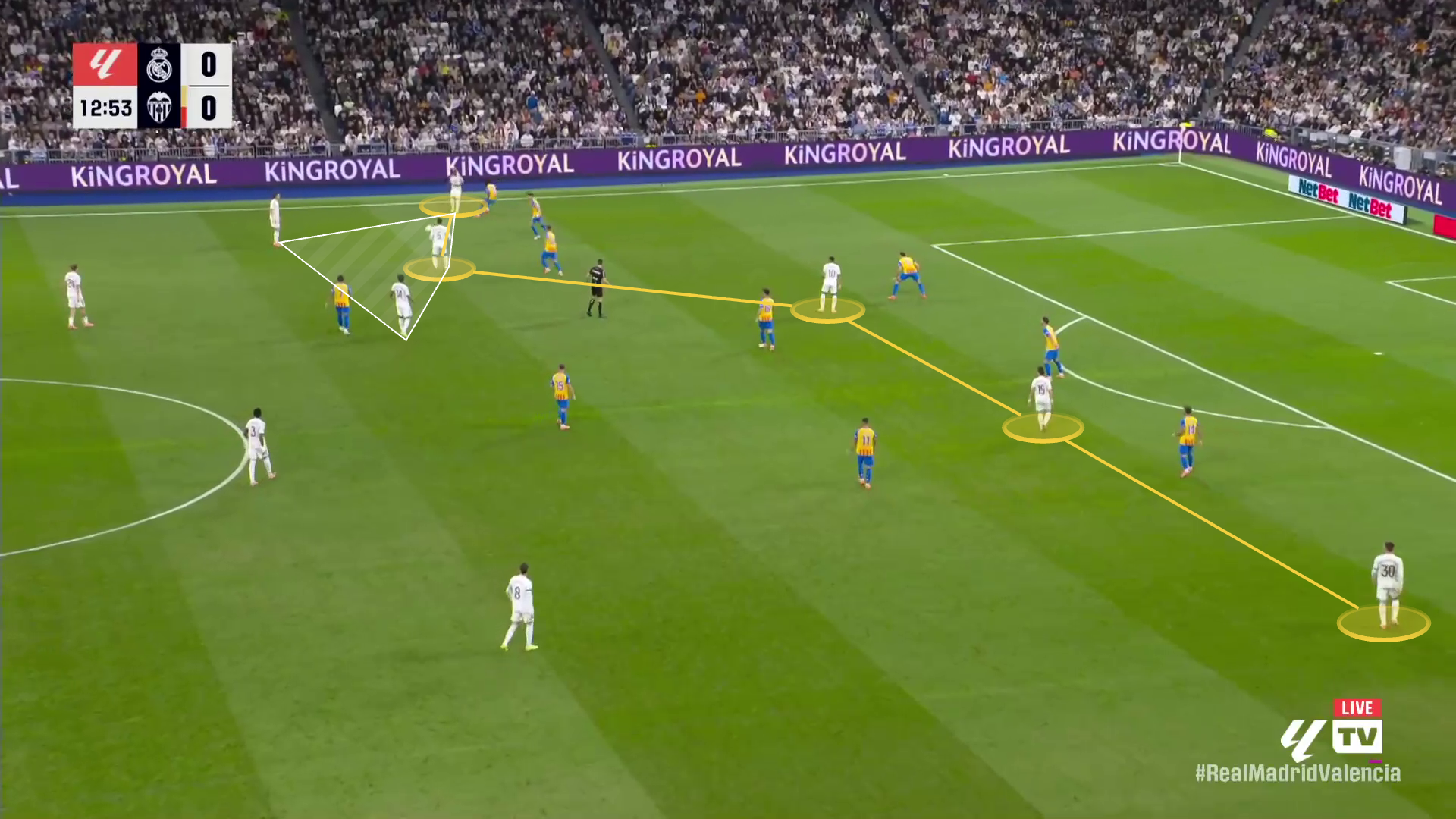
Here we see five players across the attacking line for Real Madrid despite starting with a back four. What stands out is the close proximity four players have around the ball. Alonso's rationale is that if Madrid were to lose the ball, they would be well placed to press and win it back immediately.
Despite having a general attacking structure, Alonso has been seen granting players with exceptional talent creative freedom within his set-up.
Florian Wirtz, at Leverkusen, was allowed to roam across the width of the pitch, and his quality between the lines made him the perfect profile of player for Alonso's approach.
Although less suited to playing in very small spaces, there is the potential for Alonso to trust a player of Cole Palmer's quality with a more free role.
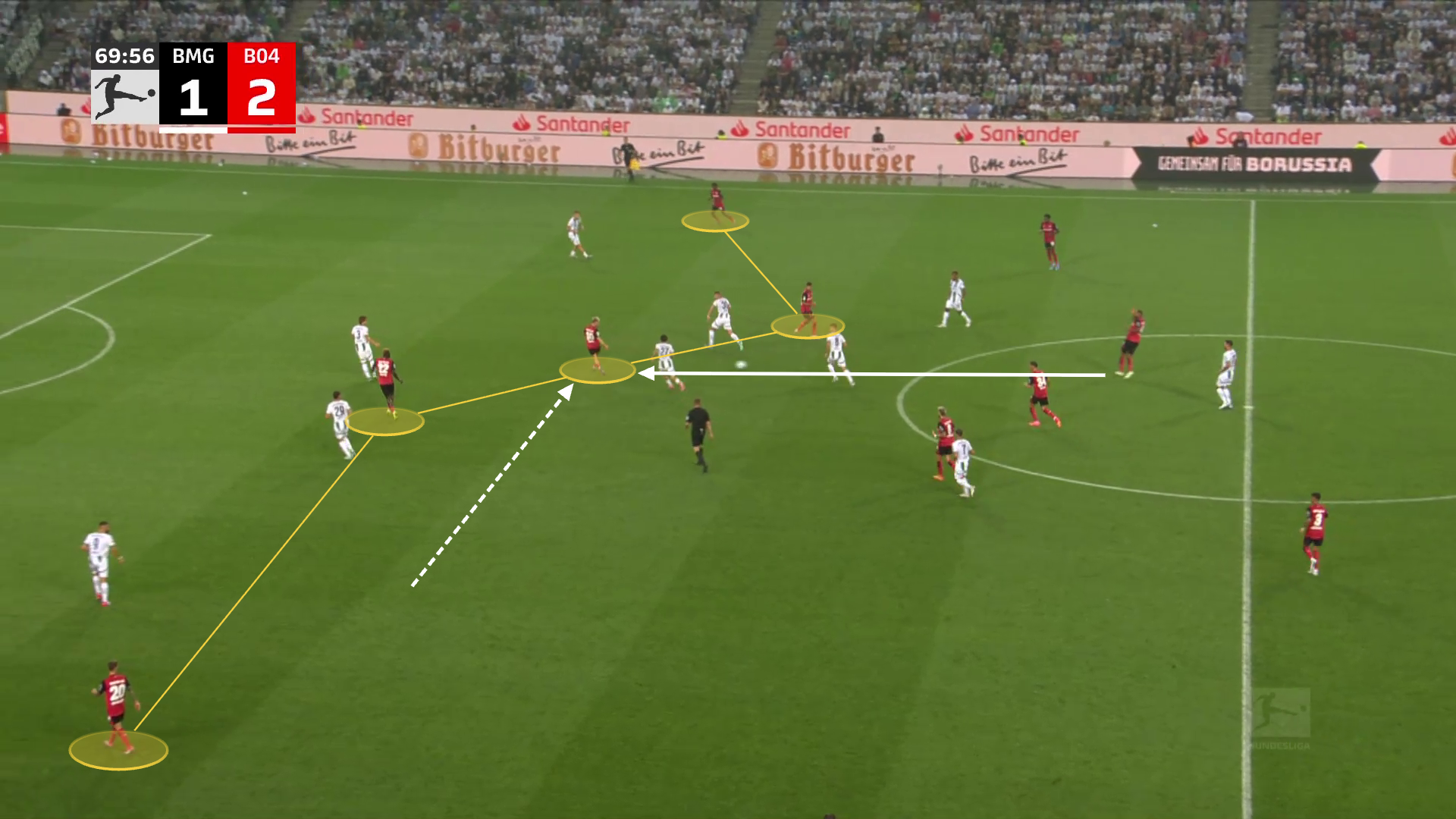
Highlighted are Leverkusen's 'front five', but as we have established there is lots of movement from them - particularly dropping deep towards the ball. Here we see the freedom Alonso afforded Florian Wirtz. The German leaves the left attacking midfield position, moving towards the right and gets the ball in a dangerous area.
These small-space interactions have worked brilliantly against zonal defensive blocks, but with the rise in man-to-man defending, Alonso's side may become stuck.
In games against Vincent Kompany's Bayern Munich and Gian Piero Gasperini's Atalanta, Alonso's teams struggled against two sides who man-mark intensely.
After the 2024 Europa League final loss to Atalanta, Alonso said: "We probably tried to play too many passes in the first phase when we should have tried to attract the first player and go long a bit more."
In a later game against Bayern, Leverkusen did go long and more often, highlighting Alonso's adaptability.
A nod to his ability to come up with new solutions depending on the opposition, Alonso pushed his left wing-back, Piero Hincapie now of Arsenal, and his right centre-back, Nordi Mukiele now of Sunderland, in the attacking five so Leverkusen had a more physical presence when going long.
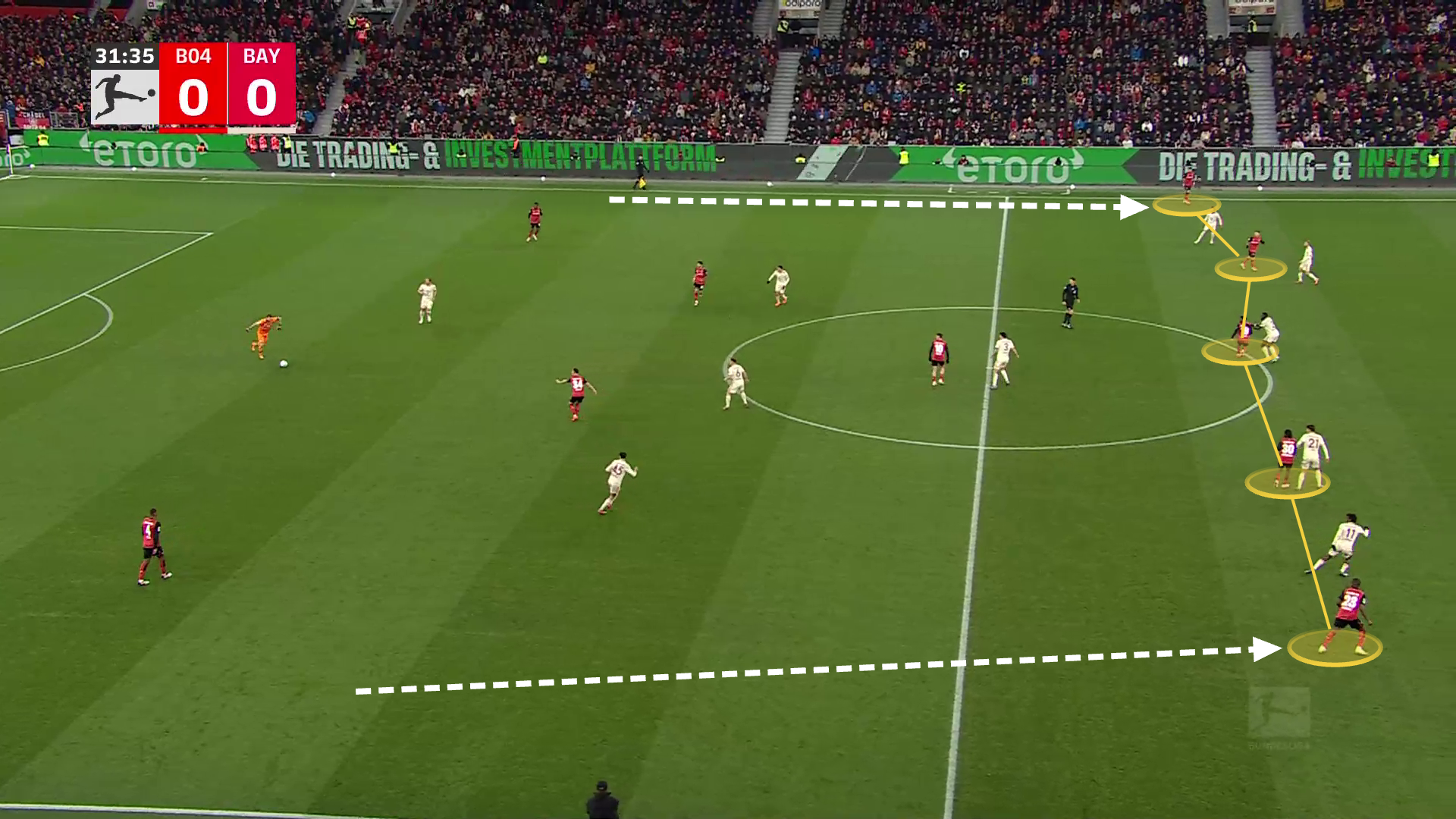
In this game, Piero Hincapie defended on the left of a back five with Nordi Mukiele at right centre-back. Here both are pushed up as Leverkusen play long - minimising the effect of Bayern Munich's high press - targeting taller, more physical players.
Notably, going long in both these games failed to result in big chances for Alonso's side because the front line struggled to make the ball stick - something Joao Pedro is capable of doing more so than Chelsea's wide players.
In theory, many of Alonso's ideas outlined in this piece have a strong basis, having worked not only for his own sides but for many of football's most successful coaches at present.
The biggest problem he faces is that these tactics are only viable if a manager has the personnel to execute them.
Significant rebuild underway
Alonso has been appointed as a manager, rather than in the head coach role held by his predecessors at Chelsea.
It is a signal the club are adapting in response to criticism of the project, both externally and internally from players.
It is also a mark of respect for Alonso's seniority and career.
However, he will not be rebuilding the club on his own. Responsibility for transfers will be shared, with the club continuing to put faith in its five sporting directors.
Alonso was optimistic but needed reassurance in his early talks with Chelsea, although he is understood to be excited by the prospect of moving to Stamford Bridge.
Chelsea were already planning to target two or three senior players with Premier League experience.
There will also be a significant number of departures, both to reshape the squad and create room for new signings already agreed.
If the club miss out on European competition, it will also help reduce squad size in line with a lighter fixture schedule.

 English (US) ·